
Everything you need to live your best no-alcohol / low-alcohol lifestyle.
How your breath can buy you thirty seconds — and why that changes everything
It's 6:15pm. You've closed the laptop, but the day hasn't closed you. There's a tightness across your shoulders, a low hum of something unfinished, and a very specific thought: I've earned a drink.
Maybe you have. This isn't an article about whether you should. It's about the thirty seconds before you decide — the small, unglamorous gap between feeling the pull and acting on it. Most of us never notice that gap exists. We go from craving to pour on autopilot, and only afterwards wonder whether we actually wanted it, or just wanted the day to stop pressing on us.
That gap is where the interesting work happens. And the tool for it is already in your body.
The craving isn't really about the drink
Here's the thing worth sitting with a lot of drinking is stress management wearing a nicer outfit.
When pressure builds, your nervous system shifts into a state it knows how to hold but doesn't enjoy — heart rate up, breath shallow and high in the chest, a background sense of being switched on. Alcohol is one reliable way to switch off. It works. That's the honest part. The problem is that it's a blunt instrument that also switches off a lot of things you'd rather keep.
So when the craving arrives, it's often not a craving for wine or beer specifically. It's a craving for the shift — from wound-up to settled, from on to off. The drink is just the fastest route your body has learned.
Which raises a genuinely useful question: what if there were another route to the same place?
What breathing does
This is where I must be careful not to oversell, because the wellness world has made a lot of large promises about breathing and delivered a lot of vague ones. So let me be specific.
When you breathe slowly through your nose — and make the exhale longer than the inhale — you stimulate your vagus nerve. That's not a metaphor. It's the main nerve of your parasympathetic nervous system, the branch responsible for calming you down. A long exhale is one of the fastest physical signals you can send your body that the threat has passed and it's safe to stand down.
Within a few breaths, your heart rate starts to drop. The tightness eases a little. The urgency behind the craving loses some of its edge. You haven't made the feeling disappear — you've changed the physiology underneath it. And crucially, you've created that gap. The pause between the craving and the pour, where a choice becomes possible again.
None of this is willpower. Willpower is exhausting and it fails at exactly the wrong moments. This is mechanics — a physical intervention you can run in three minutes, at your kitchen bench, before you've decided anything at all.
A version you can try right now
If you want to feel it rather than read about it, this takes ninety seconds:
Breathe in gently through your nose for a count of four. Then breathe out, also through your nose, for a count of six or seven — slow and unforced, like you're letting the air leave rather than pushing it. Do that six times. That's it.
Notice what happened to the craving. It probably didn't vanish. But it likely moved — from a command to a suggestion. From something happening to you, to something you're now watching. That shift — from reacting to choosing — is the whole game.
This isn't about never drinking again
Let's be clear, because this matters: the goal here isn't sobriety, and it definitely isn't shame. You might do the breathing and still pour the drink — and enjoy it more, because you chose it rather than reached for it on reflex. You might find that three or four nights a week, the craving softens enough that you don't bother. Both of those are wins. Both of those are more freedom than you had before.
What changes isn't the rule. It's who's holding the steering wheel. When you can reliably reach calm without a drink, alcohol stops being the thing you need and becomes one of several things you might choose. That's a quieter, more grown-up kind of control — and it tends to make the whole relationship with drinking feel lighter, not more restrictive.
Back to 6:15pm
So picture that moment again. Shoulders tight, day still pressing, the familiar thought arriving right on cue.
Only this time, before anything else, you take six slow breaths. Thirty seconds. And on the other side of them, the question isn't do I drink or do I not — it's simply, what do I actually want right now? You might not have asked yourself that in a while. The breath is what makes room for the asking.
That's the pause. It was always there. You just needed a way to find it.
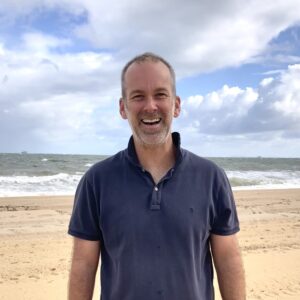
Ross Pollard is co-founder and clinical lead of BreathState, a science-backed breathwork app built for real workdays — short, guided sessions that help you reset stress, focus and cravings in a few minutes. He spent 24 years as an intensive care paramedic with Ambulance Victoria, 12 of them on the helicopter, and trained to Advanced Instructor level with Oxygen Advantage. Ross also delivers breathwork sessions for workplaces through his consulting company, Breathwork Solutions, supporting staff wellbeing and healthier, alcohol-aware cultures. Find the app and get in touch at breathstate.co.
