

Everything you need to live your best no-alcohol / low-alcohol lifestyle.
Ever wondered what inspires Alcohol Behaviour Change (ABC) coaches to do what they do?
In the Beyond the Bio Interview Series, we go beyond the professional profile to meet the people helping Australians and New Zealanders positively change their relationship with alcohol. We explore their backgrounds, approaches and techniques — and, importantly, what motivates them to do this life-changing work.
Why you'll love this interview
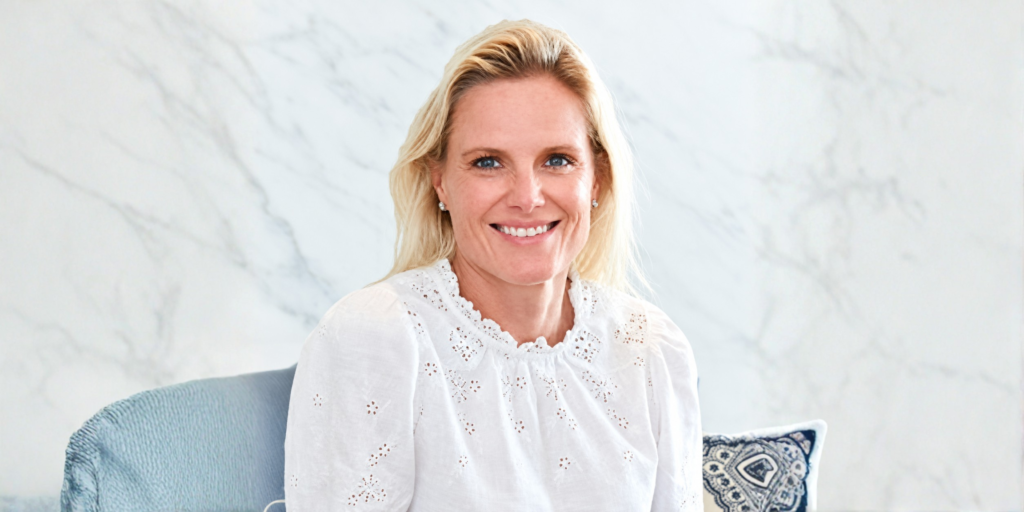
Looking for insight into the work of a Clinical Hypnotherapist who helps high-achieving women change their relationship with alcohol? In this Beyond the Bio interview, Sarah Kelt shares her experience growing up alongside a family member's alcohol addiction, her own burnout and breakdown from years of overachieving, and how that led her into Rapid Transformational Therapy and coaching.
As a Clinical Hypnotherapist and Advanced Rapid Transformational Therapist, Sarah combines subconscious reframing with practical tools to help clients change their relationship with alcohol. Her work focuses particularly on high-achieving women aged 40 to 60 who are exhausted by a drinking habit they can't seem to shake, despite everything else in their life looking fine.
Hit us with the personal stuff first, we’re intrigued to learn more about your own background and experience with alcohol?
I spent my early career in investment banking in London and Dubai: high pressure, high performance, and completely normalised burnout. I didn't drink to cope; my drug of choice was busyness. Chronic anxiety, insomnia, hyper-vigilance, I wore it all as proof I was handling things, while raising three young children and living alongside a close family member with severe alcohol addiction. That combination taught me, up close, what compulsive drinking actually does to a family: the walking on eggshells, the anticipatory dread, the way everyone else quietly reorganises their life around someone else's dependency.
My own breaking point came when I stopped moving. A relocation to Bali took away the busyness I'd been using to outrun everything, and without it, my nervous system finally gave out. What followed was a full breakdown: the end of my marriage, real fear about the future, total depletion. Medication took the edge off. Talk therapy gave me insight but didn't change my behaviour. What actually shifted things was Rapid Transformational Therapy, not because it helped me “manage” my anxiety, but because it showed me where it came from. Underneath it was a lifetime of low self-worth, playing out as people-pleasing, perfectionism and self-abandonment. Once I understood that, the anxiety stopped being evidence that I was broken.
That's the lived experience I bring to this work. Not as someone who's read about compulsive coping, but someone who's lived both sides of it: the family member drinking, and my own version of it playing out through overachievement and self-neglect.
Now let’s cover off on the credentials – what makes you qualified to work in this specialised field of coaching?
I hold a BCom in Marketing and Finance, and I'm a Clinical Hypnotherapist and Advanced Rapid Transformational Therapist, trained directly under Marisa Peer. I've delivered thousands of hours of RTT and worked with over 1,500 clients, (over the past 9 years) the majority around alcohol dependency, anxiety and burnout. I've also been featured in Woman magazine, The Platform, and on SENZ Radio and iHeart Radio talking about this work.
If I was to work with you, what should I expect?
Everything is delivered online, so you can work with me from anywhere, no need to take time off work or explain a gap in your calendar. My method, the Subconscious Recovery Method, works on two levels at once, because I don't believe you can fix one without the other.
Pillar one is subconscious: a Rapid Transformational Therapy session where we go straight to the root of why the drinking pattern exists in the first place, not analysing it for months, but actually reframing the belief driving it. Most clients feel the shift in that single session.
Pillar two is conscious: real, practical tools for regulating your nervous system, managing stress and emotion, and catching the “drinking-thinking voice” before it wins. This is the part most recovery approaches skip entirely, and it's exactly why willpower-only methods fail. You can understand your root cause perfectly and still relapse if nobody's taught you how to actually regulate stress without a glass in your hand.
Depending on the level of support you need, we're looking at anywhere from a self-paced program up to a fully guided 1:1 process with weekly coaching. Most clients feel a genuine shift in their relationship with alcohol within two to four weeks.
What sort of people do you normally work with?
Mostly high-achieving women aged 40 to 60: professionals, business owners, mothers. On paper their lives look completely fine, successful career, stable home, capable and reliable. Privately, they're exhausted from a nightly drinking habit they can't seem to shake despite trying, carrying a lot of shame, and terrified of ever being labelled “an alcoholic.” They don't identify with that word, and they shouldn't have to, to get real help.
Why would I choose you to work with?
Because I don't ask you to declare yourself powerless to get better. Most traditional models, AA, rehab, generic talk therapy, work purely at the conscious level: rules, labels, repeated storytelling. That approach can actually deepen shame for high-functioning people, and shame is not a great motivator for lasting change.
I work at the level where the behaviour is actually generated, the subconscious, and pair that with practical, real-world tools so the change survives contact with your actual life: your job, your family, your stress. I'm not interested in getting you through 30 days dry. I'm interested in you no longer needing the drink in the first place. That's the difference between managing a habit and removing it.
How can people wanting to work with you get in touch?
Link to a video explaining the philosophy of my program
Link to a free 15 minute Discovery Call
Sarah's story offers a personal look at what can lead someone to become a Clinical Hypnotherapist for alcohol recovery and how lived experience, both within her family and her own burnout, can shape their approach to supporting others.
NoLo Life thanks Sarah for sharing her personal journey, therapeutic approach and experience as a Clinical Hypnotherapist for alcohol recovery.
If Sarah's approach resonates with you, visit her website or book a free discovery call using the links above. You can also explore other ABC Coaches and Therapists through NoLo Life's Individual Support Directory.
